 Save
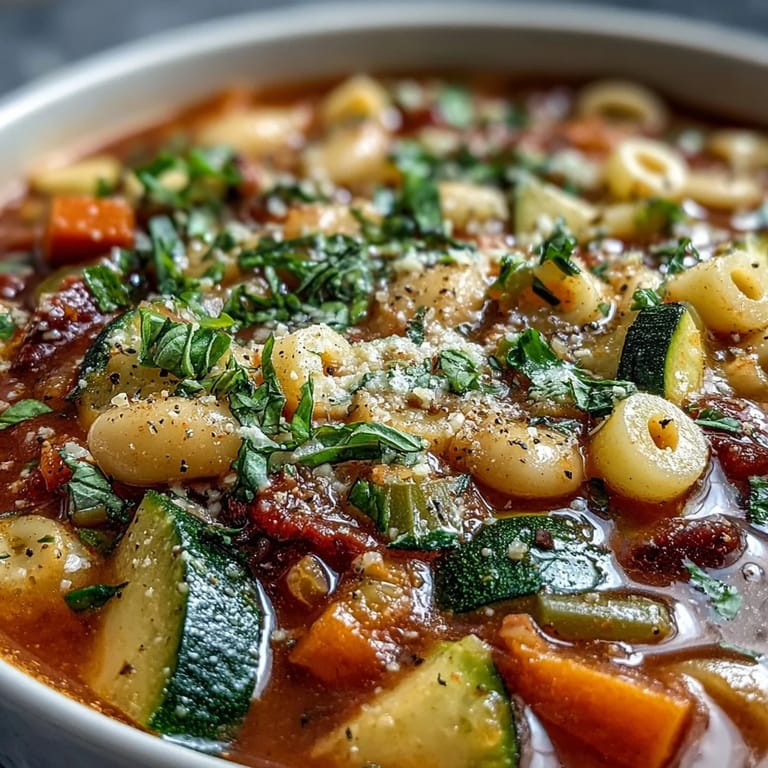
Save My neighbor Maria showed up at my door one October evening with a pot of minestrone, steam rising from under the lid, and I've been chasing that exact flavor ever since. There's something about the way the vegetables soften into the broth, how the pasta soaks up all that herbaceous warmth—it felt less like following a recipe and more like being welcomed into someone's kitchen. That first spoonful made me understand why Italians don't overthink soup; they just let good ingredients do their job. Now whenever the weather turns cool, I find myself chopping vegetables almost without thinking, muscle memory taking over.
I made this for my sister when she was recovering from the flu, and she actually asked for seconds before I'd even cleared the bowls—that's when I knew I'd nailed it. The soup felt nourishing without being heavy, bright from the fresh herbs at the end but grounding from the beans and pasta underneath. She said it tasted like someone cared, which I suppose is the whole point of minestrone.
Ingredients
- Olive oil: Use a good quality one you actually enjoy tasting, since it's the fat that carries flavor through the entire pot.
- Onion and garlic: These two are your flavor foundation—don't rush them, let them get soft and fragrant before moving on.
- Carrots, celery, and zucchini: The holy trinity gets joined by zucchini for a lighter note; dice them all to similar sizes so they cook evenly.
- Potato: Peeling it first keeps the broth clear and elegant, but leaving the skin on adds earthiness if that's your preference.
- Green beans: Cut into bite-sized pieces so you're not wrestling with them on the spoon.
- Diced tomatoes: Canned is better than fresh here because the acidity and sweetness have already concentrated; don't drain the juice.
- Vegetable broth and water: The combination gives you richness without overwhelming the vegetables.
- Cannellini beans: Creamy and mild, they meld into the broth without competing; always rinse them to remove excess sodium.
- Small pasta: Ditalini or elbow macaroni catches the broth in every bite.
- Dried oregano and basil: These bloom when the liquid comes to a boil, so don't skip that step.
- Bay leaf: It's your safety net against flatness; fish it out before serving because nobody wants to bite one.
- Fresh parsley and basil: Stirred in at the very end, they brighten everything and remind you this is alive.
- Parmesan cheese: Optional but transformative—a light shower finishes each bowl.
Tired of Takeout? 🥡
Get 10 meals you can make faster than delivery arrives. Seriously.
One email. No spam. Unsubscribe anytime.
Instructions
- Begin with the foundation:
- Heat your olive oil in a large pot over medium heat, then add the chopped onion and minced garlic. Let them soften for about 2 to 3 minutes, stirring occasionally, until the kitchen starts smelling like someone's home cooking.
- Build your vegetable layers:
- Add the diced carrots, celery, zucchini, potato, and green beans all at once. Sauté for 5 to 6 minutes, stirring every so often, until the vegetables start releasing their sweetness and the pot looks fuller and more alive.
- Bring in the liquid:
- Pour in the canned tomatoes with their juices, the vegetable broth, and water. Scatter in the dried oregano, dried basil, and bay leaf, then season generously with salt and pepper.
- Let it come to life:
- Bring everything to a boil—you'll see small bubbles breaking the surface and smell the herbs activating. Once it's boiling, reduce the heat to a gentle simmer and cover the pot with a lid.
- Give it time to meld:
- Simmer covered for 15 minutes while the vegetables become tender and the flavors start finding each other. This is when you can step back and let the pot do the work.
- Add the final players:
- Stir in the drained cannellini beans and the dry pasta, then leave it uncovered. Simmer for another 10 to 12 minutes, stirring occasionally, until the pasta is tender and has absorbed some of the savory broth.
- Finish with freshness:
- Fish out that bay leaf carefully, then stir in the fresh chopped parsley and basil if you're using it. Taste and adjust the salt and pepper—minestrone should taste like it's singing.
- Serve and celebrate:
- Ladle the soup into bowls, grate a little Parmesan over the top if you like, and hand it to someone you care about.
 Save
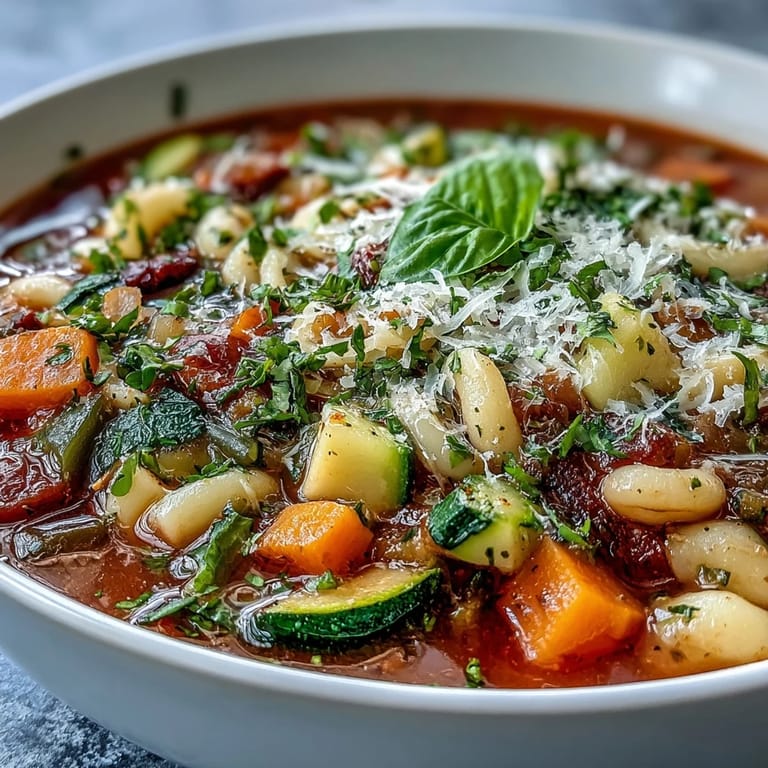
Save There's a moment about halfway through simmering when you lean over the pot and just breathe in—that's minestrone telling you it's working. It's humble food that somehow feels celebratory, the kind you want to make again almost as soon as you finish eating it.
Seasonality and Substitutions
Minestrone is meant to bend with what's available to you. In summer, I swap the potato for fresh corn and add handfuls of spinach at the very end; in winter, I double down on root vegetables and sometimes throw in a cup of shredded kale. The framework stays the same, but the soul of the soup changes with the season. Don't be afraid to experiment—the recipe is forgiving, and honestly, your version is probably going to be perfect for your kitchen anyway.
Building It Heartier
If you want something more substantial, there are gentle ways to deepen the soup without losing what makes it work. Cooking a few strips of pancetta or guanciale until crispy and adding them with the onions gives you a savory backdrop; you could also stir in an extra can of beans, or top each bowl with a thick slice of toasted bread rubbed with garlic. Some people add a Parmesan rind while it simmers for richness—just remember to pull it out before serving.
The Little Details That Matter
Texture is everything in minestrone, which is why the layering of cooking times matters so much. Everything should feel tender but distinct, not dissolved into mush. The pasta should have a slight bite to it, the beans should stay whole, and the fresh herbs at the end should remind you that this isn't just a winter warmer—it's alive.
- Let the soup cool slightly before tasting for salt, since hot food tastes less seasoned than it actually is.
- If you make this ahead, the pasta will continue soaking up broth as it sits, so you might need to add a splash of water when reheating.
- Minestrone freezes beautifully for up to three months, though it's also one of those soups that tastes better the next day when everything has had time to know each other.
 Save
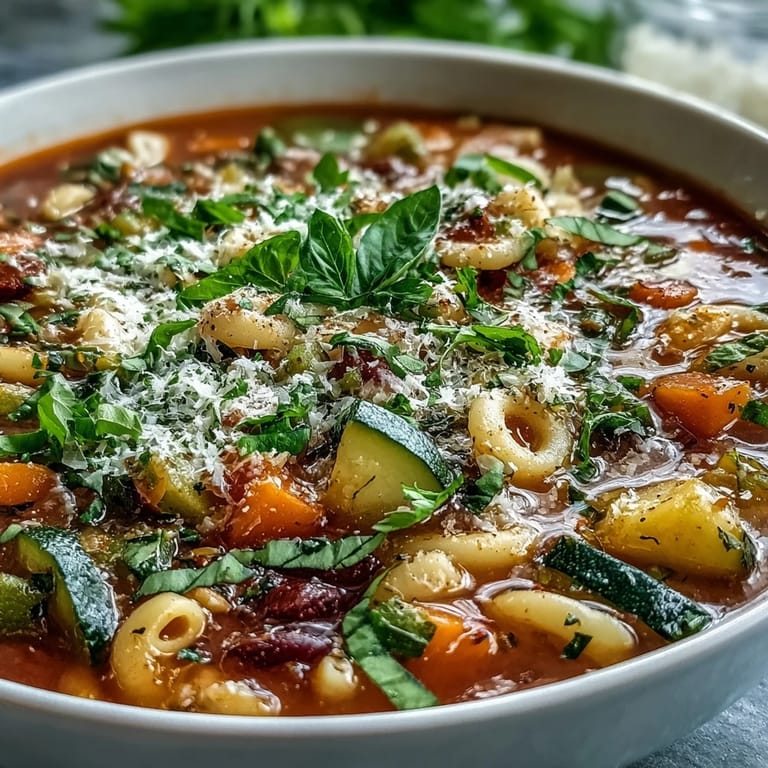
Save This soup has a way of turning an ordinary Tuesday into something warm and remembered. Make it for yourself, make it for someone else, and then make it again.
Questions & Answers for Recipes
- → What vegetables work best in minestrone?
Traditional minestrone includes carrots, celery, onions, zucchini, green beans, and potatoes. You can easily adapt based on seasonality—try spinach, kale, or cabbage in winter, or fresh tomatoes and summer squash when they're abundant.
- → Can I make minestrone gluten-free?
Absolutely. Simply substitute regular pasta with your favorite gluten-free variety. Rice-based small pasta shapes work particularly well and maintain their texture nicely in the broth.
- → How long does minestrone keep in the refrigerator?
Stored in an airtight container, minestrone keeps well for 4-5 days. The flavors often develop and improve after a day or two. If you're meal prepping, consider adding the pasta fresh when reheating to prevent it from becoming too soft.
- → Can I freeze minestrone soup?
Yes, minestrone freezes beautifully for up to 3 months. For best results, freeze the soup without the pasta, then cook fresh pasta when you reheat. This prevents the pasta from becoming mushy during freezing and thawing.
- → What type of pasta is traditionally used?
Small pasta shapes like ditalini, elbow macaroni, shells, or tubetti are classic choices. Their small size cooks evenly and provides a satisfying texture in every spoonful. You can also break spaghetti into smaller pieces if that's what you have available.
- → Is minestrone suitable for vegetarians and vegans?
The base version is completely vegetarian as it uses vegetable broth. For a vegan option, simply omit the Parmesan garnish or use a plant-based cheese alternative. The soup is packed with protein from the cannellini beans.