 Save
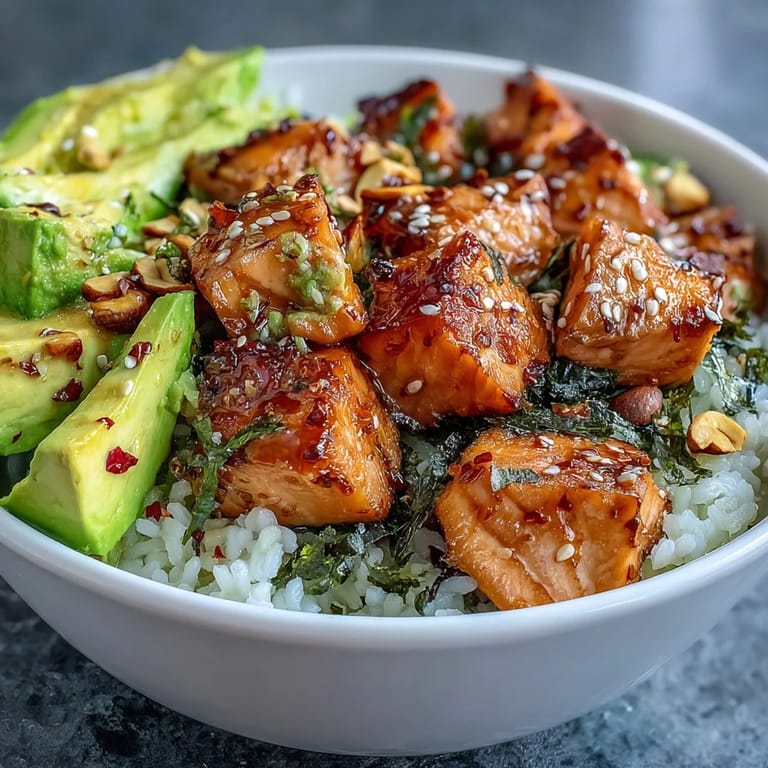
Save There's something about assembling a bowl that feels less like cooking and more like creating. I discovered this avocado salmon bowl on a Tuesday afternoon when my fridge held exactly three things worth saving: a beautiful salmon fillet, half an avocado that was somehow still perfect, and leftover sushi rice. What started as a makeshift lunch turned into something I now make deliberately, layering flavors like I'm building something to be proud of.
I made this for my sister last summer when she was going through a phase of being extra cautious about what she ate. She took one bite and immediately asked if she could have the recipe, which never happens. Now I know she makes it on Sunday nights when she wants to feel a little bit fancy without the fuss.
Ingredients
- Fresh salmon fillet (250 g, skinless and cubed): Look for that deep coral color and ask your fishmonger to remove the skin for you—it saves time and the cubes cook more evenly.
- Tamari sauce (2 tbsp): It's naturally gluten-free and tastes slightly less salty than regular soy sauce, which lets other flavors shine through.
- Toasted sesame oil (1 tsp): A little goes a long way; use the toasted kind for that nutty depth that changes everything.
- Rice vinegar (1 tsp plus 1 tbsp for the rice): This is gentler and sweeter than white vinegar, giving brightness without harshness.
- Honey or agave syrup (1 tsp): Just enough sweetness to balance the tamari and sesame without being obvious about it.
- Cooked sushi rice (200 g or about 1 cup uncooked): Short-grain rice holds the marinade better than long-grain and gives the bowl its signature sticky, clingy base.
- Sugar (1/2 tsp) and salt (pinch): These season the rice properly so every bite tastes intentional.
- Ripe avocado (1 large): Slice it just before serving to keep it from browning; if you're worried, toss the slices in a touch of lime juice.
- Roasted peanuts (2 tbsp, roughly chopped): The crunch is non-negotiable, and roasted means they're already flavorful without extra work.
- Chili oil (1 tbsp): Start with less if you're unsure; you can always drizzle more but you can't take it back.
- Wasabi paste (1 tsp): A little dab provides that clean, nostril-clearing heat that wakes up your palate.
- Nori sheets (1 sheet, cut into strips): Optional but worth it for that umami punch and the satisfying rustle when you chew it.
- Cucumber (1 small, thinly sliced): The watery crispness cools everything down and adds a refreshing counterpoint to the richness.
- Spring onions (2, sliced): Raw and sharp, they cut through all the richness like a little flavor correction.
- Toasted sesame seeds (1 tbsp): Toast them yourself if you can; the aroma alone is worth the two minutes.
- Fresh cilantro or microgreens (optional): A handful adds brightness and makes the bowl look like you actually know what you're doing.
- Lime wedges: Squeeze them over everything or squeeze them into a dish of tamari for dipping.
Tired of Takeout? 🥡
Get 10 meals you can make faster than delivery arrives. Seriously.
One email. No spam. Unsubscribe anytime.
Instructions
- Make the marinade and coat the salmon:
- Whisk together tamari, sesame oil, rice vinegar, and honey in a medium bowl until the honey dissolves. Add your salmon cubes and toss gently so every piece gets coated, then cover and slide it into the fridge for 10 to 15 minutes. This isn't just about flavor—the acid in the vinegar starts to gently cook the outside while the marinade infuses the inside.
- Season your rice:
- If your sushi rice has cooled, heat it gently or use it at room temperature. Mix in rice vinegar, sugar, and salt until it disappears into the grains and tastes perfectly balanced. Taste it before moving on; this is your foundation.
- Prep all your toppings:
- Slice the avocado lengthwise, twist the halves apart, remove the pit, and slide a spoon under the flesh to pop out neat slices. Chop your peanuts to a rough, uneven size so some pieces add texture and others add substance. Cut your nori, slice your cucumber into thin crescents, and chop your spring onions on a slight angle so they look intentional.
- Build your bowls:
- Divide the seasoned rice between two bowls and press it down gently with the back of a spoon so it stays in place. Arrange your marinated salmon, avocado slices, cucumber, and spring onions over the top in whatever pattern appeals to you.
- Add heat and flavor:
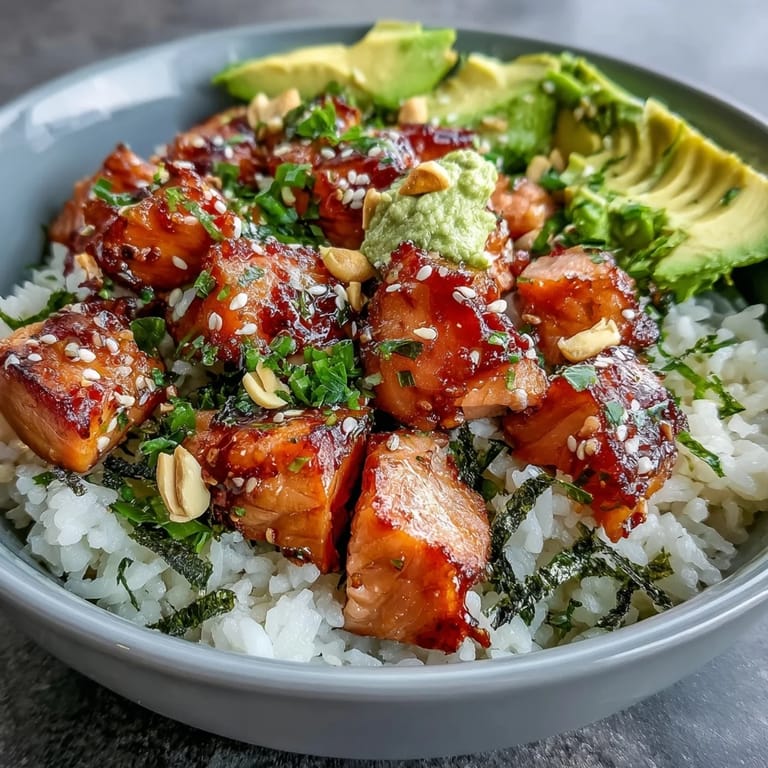
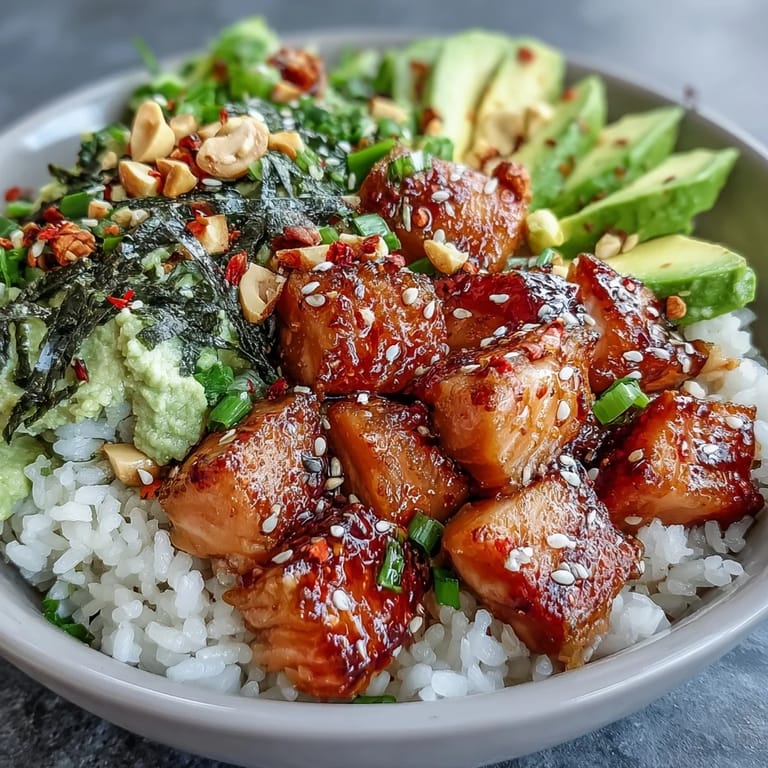
- Drizzle the chili oil over each bowl in a thin spiral, then add a small dot of wasabi paste (you can always add more). Sprinkle the peanuts, sesame seeds, and nori strips across the top, then add cilantro or microgreens if you're using them.
- Serve and season to taste:
- Set each bowl down with lime wedges on the side and let people squeeze them over everything or make a tamari-lime dipping sauce. Eat it while the rice is still warm and the peanuts are still crispy.
 Save
Save I made this bowl for my friend who said she didn't like wasabi, and I watched her face as she tentatively tasted it mixed into the rice with the avocado—suddenly she understood why people chase the burn. She now keeps wasabi paste in her pantry.
Why This Bowl Works
Every component serves a purpose beyond just tasting good. The warm rice calms the heat, the cool cucumber softens the richness, the peanuts add texture that makes you slow down and chew, and the wasabi keeps your palate sharp. It's a conversation between flavors instead of a pile of things on a plate.
Making It Your Own
This is the kind of bowl that thrives on customization. I've made it with leftover roasted salmon, with marinated tofu when I didn't have fish, with cashews instead of peanuts, with pickled ginger stirred right into the rice. The structure stays the same—acid, fat, protein, vegetables, crunch, heat—but the details shift based on what your kitchen holds and what you're in the mood for.
Timing and Prep
The beauty of this recipe is that almost everything can be done ahead. You can marinate your salmon in the morning and keep it cold until dinner, slice your vegetables and store them in containers, even season your rice and reheat it gently when you're ready to eat. On a busy night, assembly takes maybe five minutes if you've already done the thinking.
- Marinate the salmon for the full 15 minutes if you have time—it makes a noticeable difference in tenderness and flavor.
- If you forget to marinate, even 5 minutes is better than zero, and the heat from serving will finish the cooking anyway.
- Toast your own sesame seeds in a dry pan for 2 minutes if you have them whole; the aroma is a small luxury that costs nothing.
 Save
Save This bowl has become my answer to when I want to feel like I've taken care of myself but don't want to spend an hour in the kitchen. There's something about eating well that feels like love, even when it's just you at the table.
Questions & Answers for Recipes
- → How do I marinate the salmon for optimal flavor?
Whisk tamari sauce, toasted sesame oil, rice vinegar, and honey or agave syrup, then toss the salmon cubes in the mixture. Let them soak up the flavors in the fridge for 10–15 minutes before assembling.
- → Can I substitute the salmon for plant-based options?
Yes, marinated tofu or tempeh work well as protein alternatives, keeping the texture and flavor balance in the bowl.
- → What rice is best suited for this bowl?
Cooked sushi rice provides the right sticky and slightly sweet base, complementing the savory and zesty ingredients.
- → How can I adjust the spice level in this dish?
Modify the amount of chili oil and wasabi paste to suit your heat preference; start with less and add more gradually.
- → What are some topping variations to try?
Consider adding pickled ginger, edamame, or swapping peanuts for cashews or seeds to change texture and flavor layers.