 Save
Save One Tuesday night, I was standing in front of my open fridge feeling completely uninspired, staring at a salmon fillet that needed rescuing and some half-wilted vegetables that deserved better. I remembered watching someone at a local food market assemble these gorgeous rice bowls with such ease and confidence, and thought, why not try building something like that at home? The result was so satisfying and came together so quickly that it became my go-to when I need dinner that actually feels like I tried, without the fuss.
I made this for my sister who'd been swearing off carbs, and watching her face light up when she realized this was both wholesome and genuinely delicious was the whole point. She kept asking what I'd done to make the salmon taste like it came from somewhere fancy, and I realized then that simple ingredients cooked with a little intention are really all you need.
Ingredients
- Salmon fillet (500 g, cut into cubes): Choose a good quality piece with a slightly firm texture—it'll hold its shape better during broiling and won't turn mushy on you.
- Soy sauce (2 tbsp): Use tamari if you're cooking gluten-free, and honestly it tastes just as good; some people swear it's even better.
- Sesame oil (1 tbsp): Don't skip this—it's what gives the marinade that warm, toasty depth that makes people ask what your secret ingredient is.
- Honey or maple syrup (1 tbsp): This balances the saltiness and caramelizes slightly on the salmon edges, creating little pockets of sweetness.
- Fresh ginger (1 tsp, grated): Use a microplane if you have one; it distributes more evenly than mincing with a knife.
- Garlic (1 clove, minced): One clove is enough—garlic has a way of announcing itself, and you want the other flavors to have their moment too.
- Jasmine or sushi rice (2 cups): Jasmine rice is slightly perfumed and fluffy, which pairs beautifully with the Asian-inspired flavors throughout the bowl.
- Water (3 cups): The ratio matters here—too much water and you'll have mushy rice; too little and it'll be dry and stuck to the pan.
- Cucumber, carrots, edamame, avocado, green onions (assorted vegetables): These are your texture play—keep them fresh and crisp by adding them just before serving, not hours before.
- Sriracha mayo or soy sauce (for drizzling): Make the sriracha mayo fresh if you can; bottled versions sometimes taste a bit flat and one-dimensional.
- Toasted sesame seeds (2 tbsp): Toast them yourself if possible—the difference between store-bought and fresh-toasted is genuinely noticeable in every bite.
Tired of Takeout? 🥡
Get 10 meals you can make faster than delivery arrives. Seriously.
One email. No spam. Unsubscribe anytime.
Instructions
- Heat your oven and prep your workspace:
- Get your oven to 220°C (425°F) and line a baking tray with parchment paper so you don't have sticky salmon remnants baked on—trust me on this one. This takes about two minutes but saves you from serious scrubbing later.
- Build the marinade and coat the salmon:
- Whisk together soy sauce, sesame oil, honey, ginger, garlic, and pepper in a bowl, then add your salmon cubes and let them sit for 10 minutes. The marinade doesn't need to be long because salmon is delicate and these flavors work fast.
- Get the rice going while salmon rests:
- Rinse your jasmine rice under cold running water, stirring gently with your fingers until the water runs clear—this removes the starch and keeps the grains from clumping together. Combine the rinsed rice with 3 cups of water and salt in a saucepan, bring to a boil, then lower the heat, cover, and let it simmer gently for 12 to 15 minutes.
- Broil the salmon until just cooked through:
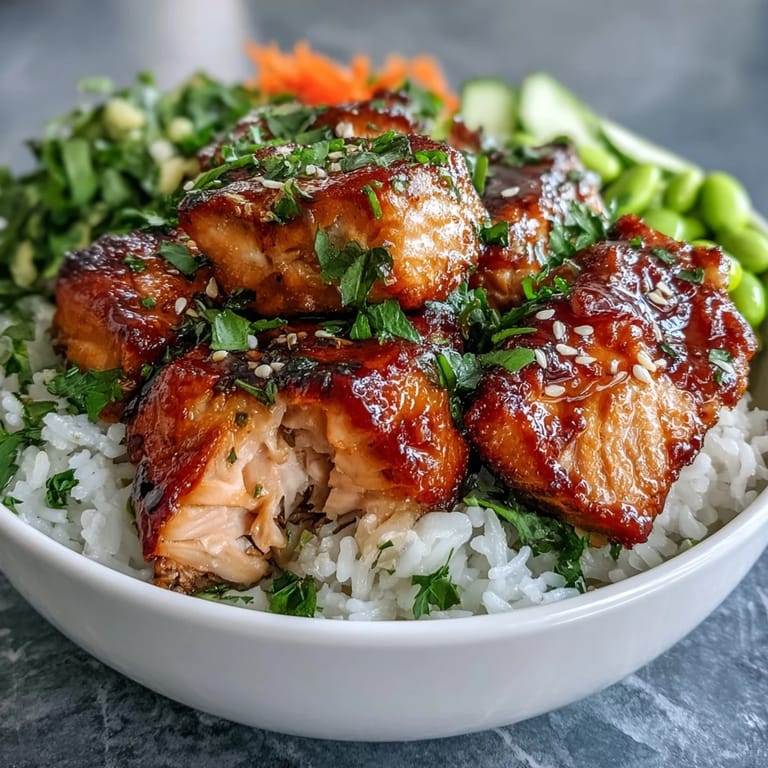
- Spread the marinated salmon cubes on your prepared tray in a single layer and slide under the broiler for 8 to 10 minutes until the edges are lightly browned and the centers are opaque. Watch it the first time you make this so you know how fast it cooks in your particular oven.
- Prepare all your fresh vegetables and garnishes:
- While the salmon finishes, slice your cucumber, shred your carrots, slice your avocado, chop your green onions, and get everything arranged and ready. Having everything prepped means assembly is quick and the vegetables stay cool and crisp.
- Assemble and serve each bowl with intention:
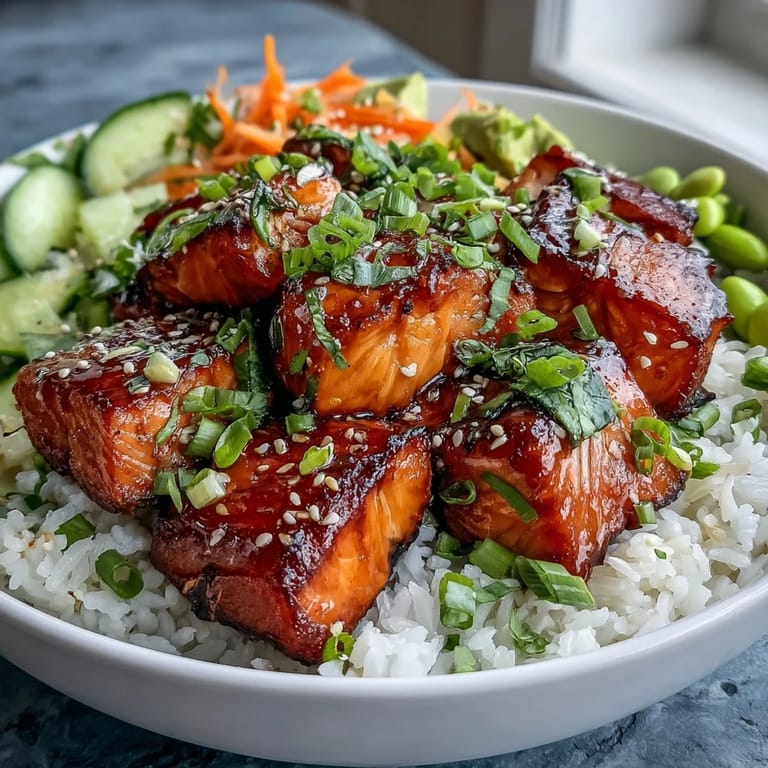
- Divide the fluffy rice among four bowls, then top each with salmon, cucumber, carrots, edamame, avocado slices, and green onions in whatever arrangement makes you happy. Drizzle with your chosen sauce, scatter sesame seeds on top, and serve immediately with lime wedges for squeezing.
 Save
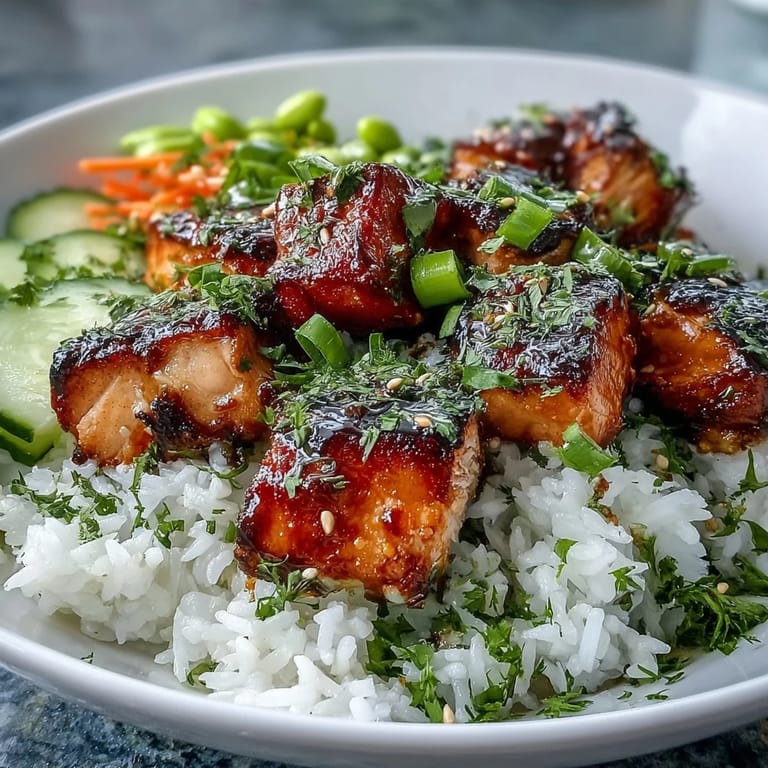
Save There's something almost meditative about assembling these bowls—the way the colors layer together, how each element has its own texture and purpose, how you can taste every component without anything overpowering the others. It's become one of those dishes I make when I want to feel like I'm taking care of myself and actually enjoying the process.
The Magic of the Marinade
The beauty of this particular marinade is that it's balanced—sweet, salty, nutty, spicy, and bright all at once—and it works because none of those notes shout louder than the others. I learned this by accident after making one with way too much garlic, which completely took over, and realizing that restraint is actually a skill in cooking. Now I think of the marinade as a supporting actor, there to enhance the salmon's natural flavor rather than mask it.
Why Rice Matters Here
Jasmine rice is my preference because it has this delicate floral quality that feels lighter than other varieties, which balances nicely against the richness of the salmon and creamy avocado. Brown rice or quinoa work too if you want more fiber, but they'll have a different texture and slightly earthier flavor that changes the whole vibe of the bowl. The rice is really the foundation that lets everything else shine, so don't think of it as just filler.
Sauce Strategy and Final Touches
This is where you get to play chef and decide what your bowl needs—whether that's the brightness of lime and pickled ginger, the kick of sriracha mayo, or the umami punch of soy sauce drizzled generous and proud. I usually make the sriracha mayo fresh because bottled mayo-based sauces can taste a bit flat after sitting around, and the version you mix yourself tastes fresher and more vibrant. Here's my final set of thoughts before you get cooking:
- Toast your sesame seeds just before serving if you have time—the flavor difference is worth the extra two minutes of attention.
- Don't assemble the bowls too far ahead because the rice and vegetables need to have different temperatures to really sing together.
- Keep lime wedges on the table so people can squeeze as much brightness into their bowl as they want, because acidity is your friend here.
 Save
Save This bowl has become one of those dishes that makes you feel nourished rather than just fed, and there's real magic in that. Every time I make it, I'm grateful for how straightforward it is and how consistently it delivers.
Questions & Answers for Recipes
- → Can I use frozen salmon for this bowl?
Yes, thaw frozen salmon completely before cutting into cubes and marinating. Pat the fish dry to ensure proper marinade absorption and even broiling.
- → What other grains work as a rice substitute?
Brown rice, quinoa, cauliflower rice, or even noodles make excellent alternatives. Adjust cooking times accordingly—brown rice needs about 45 minutes while quinoa cooks in 15.
- → How do I store leftovers for meal prep?
Store components separately in airtight containers: rice and salmon keep 3-4 days refrigerated, while fresh vegetables stay crisp for 2-3 days. Reheat salmon gently to avoid drying.
- → Can I grill the salmon instead of broiling?
Absolutely. Thread marinated salmon cubes onto skewers and grill over medium-high heat for 2-3 minutes per side until charred and just cooked through.
- → What vegetables can I add or substitute?
Shredded red cabbage, sliced radishes, steamed bok choy, roasted corn, or blanched sugar snap peas all work beautifully. Choose vegetables that maintain crunch when raw or lightly cooked.
- → Is this bowl freezer-friendly?
The marinated salmon freezes well for up to 3 months before cooking. However, fresh vegetables like cucumber and avocado don't freeze well—add those fresh when serving.