 Save
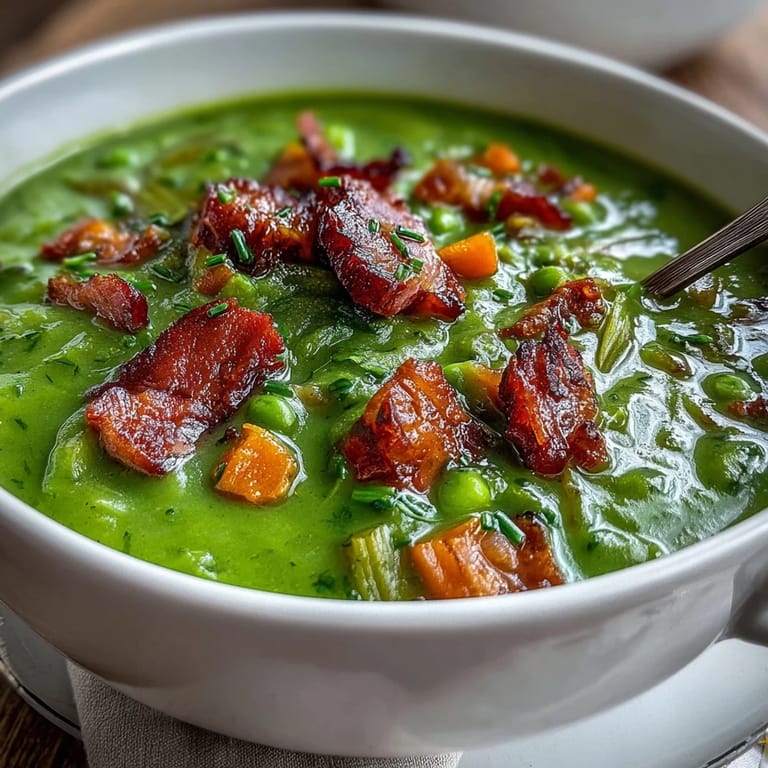
Save There's something about the smell of split peas simmering on the stove that instantly makes a kitchen feel like home. My grandmother used to make this soup every February without fail, and I'd watch the pale green peas slowly dissolve into something creamy and golden, the house filling with that unmistakable warmth. Years later, I found myself making it on a gray afternoon when I needed comfort more than anything, and suddenly I understood why she never wrote down a recipe—some dishes just know what they're supposed to be. This version is my love letter to her kitchen and to every winter day that demands a bowl of pure, honest goodness.
I made this soup for my neighbor who'd just moved in, and she showed up at my door a week later asking if I'd teach her how I made it. We ended up standing in her kitchen for three hours, not just cooking but talking through her whole first month in the neighborhood. That's when I realized this soup is more than sustenance—it's an invitation, a way of saying someone matters enough to feed properly.
Ingredients
- Dried split green peas (2 cups): Rinse these thoroughly before using; it removes the starchy dust and helps them cook more evenly without creating a gluey texture.
- Onion, carrots, and celery (the holy trinity): These three vegetables build the flavor foundation, so don't skip or rush the sautéing step—those five minutes matter.
- Potato (1 medium, diced): This adds body and subtle sweetness, though you can substitute with parsnip if that appeals to you more.
- Garlic (2 cloves, minced): Add it after the softer vegetables so it doesn't burn and turn bitter during the long simmer.
- Bay leaf and dried thyme: These aren't optional if you want authentic flavor; they're the backbone of the soup's personality.
- Vegetable or chicken broth (6 cups): Use good broth if you can—it makes a difference—or even water if that's what you have, though broth elevates everything.
- Olive oil (1 tablespoon): This gets things started; it doesn't need to be fancy, just functional.
- Smoked ham or ham bone (optional): This is where you get that savory depth, but the soup is delicious without it if you're cooking vegetarian.
- Salt and black pepper: Taste as you go; the broth may already be salty, so hold back until the end.
Tired of Takeout? 🥡
Get 10 meals you can make faster than delivery arrives. Seriously.
One email. No spam. Unsubscribe anytime.
Instructions
- Sauté your base:
- Heat the olive oil in a large pot over medium heat, then add the onion, carrots, and celery. Let them soften for about five minutes, stirring occasionally—this step builds flavor through slow, gentle cooking, not through high heat.
- Add the garlic:
- Once the vegetables are softened, stir in the minced garlic and cook for just one minute until fragrant. The aroma will shift, which is your signal that you've hit the right moment.
- Build the soup:
- Add the rinsed split peas, diced potato, bay leaf, thyme, broth, and ham if using. Stir everything together so nothing sticks to the bottom of the pot.
- The long simmer:
- Bring everything to a boil, then reduce the heat to low, cover the pot, and let it simmer for about an hour, stirring occasionally. You'll watch the peas gradually soften and the broth thicken into something rich and velvety. When the peas break apart easily with a wooden spoon, you're done.
- Remove the bones and aromatics:
- Fish out the bay leaf and any ham bone. If you used diced ham, stir it back into the soup so the pieces distribute evenly.
- Choose your texture:
- If you like a completely smooth soup, use an immersion blender to puree it right in the pot. If you prefer something a little more rustic, blend half the soup in a blender and stir it back in—this creates a naturally creamy texture without losing all the substance.
- Season and serve:
- Taste it carefully before adding salt (the broth was probably already salty) and grind in black pepper. Serve it hot, ideally with something warm and crusty to soak up the last spoonfuls.
 Save
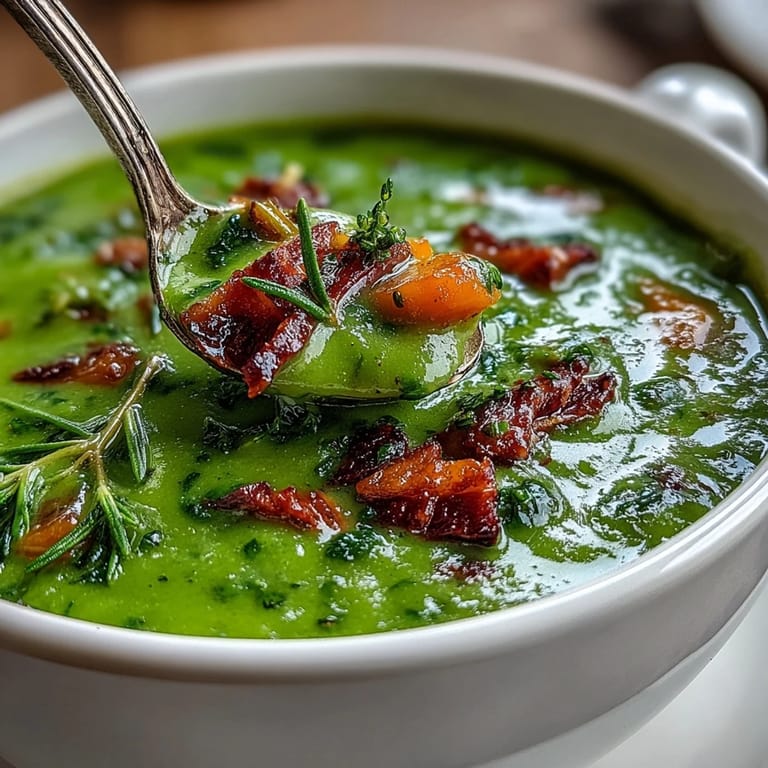
Save My son came home from school on a cold day, took one spoonful, and asked if I could make this every week. That question, asked so simply and sincerely, reminded me that the best recipes are the ones that make people feel seen and cared for. Food does that sometimes—it becomes less about technique and more about love in a bowl.
On Texture and Creaminess
The beauty of split pea soup is that it naturally becomes creamy as the peas break down, without any cream needed. You're not fighting against the ingredients here; you're working with their natural properties. Some people prefer it completely smooth like a purée, while others love the rustic texture of partially blended soup where you can still see little vegetable pieces. There's no wrong choice—only your preference.
Making It Your Own
This recipe is flexible in ways that feel generous. If you don't have celery, skip it. If you prefer more vegetables, add diced zucchini or green beans toward the end of cooking. If ham doesn't appeal to you, smoked paprika stirred in at the end gives you that smoky note without any meat. The soup adapts to what you have and what you love, which is why it's lasted this long in kitchens everywhere.
Serving and Storage
Serve this soup hot with crusty bread, a hunk of cheese, and maybe a simple salad on the side. It reheats beautifully and actually tastes better the next day once the flavors have settled and deepened. Store it in the refrigerator for up to four days, or freeze it in portions for up to three months—thaw it overnight and reheat gently on the stove, adding broth if needed to reach your preferred consistency.
- Pair it with a dry Riesling or Pinot Noir if you're in the mood for wine, though honestly, this soup is happy with just water or hot tea.
- Leftover soup transforms into something different each time you reheat it, so don't hesitate to add fresh herbs or a squeeze of lemon if the mood strikes.
- Make a double batch and freeze half—future you will be grateful on the next cold afternoon.
 Save
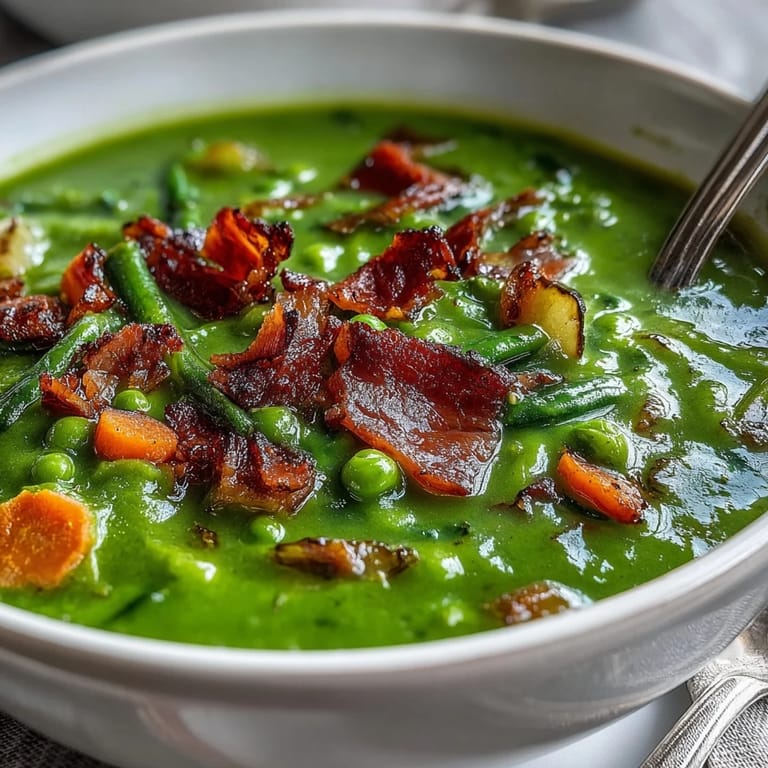
Save This soup asks nothing of you except patience and a few simple ingredients, and it rewards you with warmth, comfort, and the kind of flavor that stays with you long after the bowl is empty. Make it when you need to feel grounded, and it will do exactly that.
Questions & Answers for Recipes
- → Do I need to soak split peas before cooking?
No soaking required. Unlike dried beans, split peas cook relatively quickly and break down naturally during simmering. Just rinse them thoroughly before adding to your pot.
- → Can I make this ahead of time?
Absolutely. This soup actually tastes better the next day as flavors develop. Store in the refrigerator for up to 4 days or freeze for 3 months. Add extra broth when reheating since it thickens overnight.
- → How do I get the creamiest texture?
The peas naturally break down into creaminess. For extra richness, use an immersion blender to puree about half the soup while leaving some chunks for texture. This creates the best of both worlds.
- → What can I substitute for smoked ham?
For vegetarians, smoked paprika adds a similar smoky depth. Liquid smoke works too, or try adding a bit of miso paste for umami richness without meat.
- → Why is my soup too thick?
Split peas continue absorbing liquid as they sit. Simply add more water or broth when reheating to reach your desired consistency. This is actually a sign of a well-cooked soup.
- → Can I use yellow split peas instead?
Yes. Yellow split peas work identically in this preparation. The flavor is slightly milder and the final color will be golden rather than green, but the texture remains the same.