 Save
Save My mornings shifted the day I started sipping this broth straight from the mug before anything else touched my lips. There was something about the steam curling up, carrying that earthy warmth of turmeric and ginger, that made me pause before the day demanded anything. What began as a wellness experiment turned into a quiet ritual, then eventually became the bowl I'd make for friends who seemed tired, overwhelmed, or just needed something real. This broth has this gentle way of tasting like care itself.
I made this for my partner during a particularly rough season when nothing felt light or easy. They were skeptical at first—they'd never been a broth person—but something about sitting together with these warm bowls, the vegetables still slightly firm under our spoons, shifted something unspoken between us. Now they request it when they're coming down with something, or just when life feels heavy. Food like this reminds you that taking care of yourself isn't indulgent; it's how you stay able to show up.
Ingredients
- Bone broth (1.5 liters): This is your foundation—the slow-simmered version with actual bones and cartilage, whether beef or chicken, matters more than you'd think. High-quality matters here because you're drinking the essence of it; I learned this the hard way by trying to economize and tasting the regret in every spoonful.
- Fresh ginger and turmeric (thumb-sized pieces): Don't reach for powdered versions if you can help it; the fresh root gives you a brightness that ground spices simply can't replicate. I keep these in my crisper drawer at all times now.
- Apple cider vinegar (2 tbsp): This is the quiet hero—it helps your body extract and absorb all those minerals and collagen you're about to spend two hours building.
- Black peppercorns (1 tsp whole): Whole over ground, always, because they release their oils slowly during the long simmer and create this subtle heat that accumulates rather than shouts.
- Carrots, celery, and broccoli: These aren't just filler; they add sweetness and minerals that complement the earthy broth base. Choose vegetables that feel alive—not wrinkled or soft.
- Baby spinach and zucchini: These go in last so they stay vibrant and tender rather than turning into submission.
- Fresh parsley or cilantro: The green at the end matters—it's brightness against the deep warmth of the broth, and it helps your digestion too.
Tired of Takeout? 🥡
Get 10 meals you can make faster than delivery arrives. Seriously.
One email. No spam. Unsubscribe anytime.
Instructions
- Build your flavor foundation:
- In your largest stockpot, combine the bone broth with quartered onion, smashed garlic, sliced ginger, turmeric, apple cider vinegar, whole peppercorns, and salt. When you bring this to a gentle boil over medium-high heat, you'll see the broth come alive—slight bubbles breaking the surface, steam rising with that unmistakable golden-warm smell. This is exactly what you want.
- Let time do the work:
- Lower the heat to barely-there, cover the pot loosely, and let it simmer for 1.5 hours without touching it. This is when the collagen breaks down into gelatin, when minerals leach from the bones into the liquid, when the whole thing becomes medicine. I set a timer and use this time to do something nourishing—reading, stretching, preparing vegetables—rather than rushing around the kitchen.
- Strain with intention:
- Pour the broth through a fine mesh sieve into a clean pot, letting gravity do the work rather than pressing down on the solids. The clear, golden broth that comes through is your reward for patience. Compost or save those softened vegetables if they still have life in them.
- Layer your vegetables by timing:
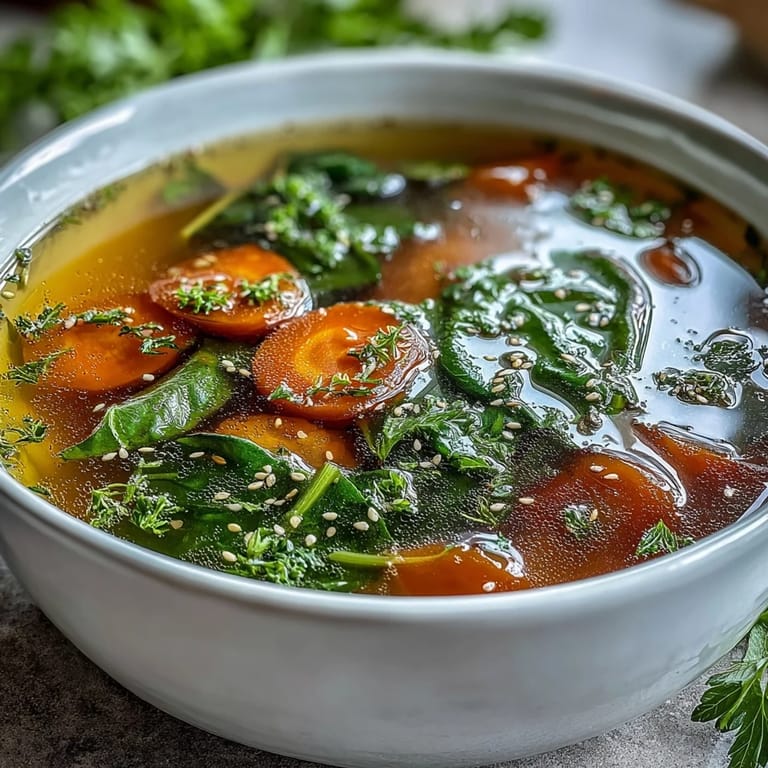
- Add the sliced carrots, celery, and broccoli florets first, simmering for 10 minutes until they start to soften but still have a gentle resistance when you bite them. Then stir in the zucchini and fresh spinach, simmering for just 2 to 3 minutes more—you're looking for the spinach to wilt and brighten, not turn gray and defeated.
- Taste and trust your instincts:
- Before you ladle into bowls, taste the broth and adjust the salt if it needs it. Sometimes an extra pinch transforms everything from good to something you want to drink on its own.
- Finish with intention:
- Divide the broth and vegetables into bowls, then shower each one with fresh chopped parsley or cilantro, a scatter of sesame seeds if you have them, and a squeeze of fresh lemon juice. The lemon is essential—it brightens everything and helps your body absorb the iron from the greens.
 Save
Save I started keeping a small thermos of this broth in my bag during autumn, sipping it between meetings when I felt myself getting scattered. People thought I was strange at first, then curious, then asking where I got it. Now I make double batches knowing friends will text asking if I'm making broth soon. There's something almost healing in being able to offer something warm and thoughtful to someone you care about.
Why This Broth Becomes a Ritual
The first time you drink something you've simmered for hours is different than drinking something you quickly heated. There's a kind of satisfaction in knowing exactly what's in your cup—no mysterious additives, no second-guessing, just bones and roots and time. I noticed after about three weeks of regular mornings with this broth that my joints felt less creaky, my skin felt more hydrated from the inside, and something I can't quite name just felt steadier. It's the kind of change that sneaks up on you rather than announcing itself.
Variations That Keep It Interesting
Once you've made the base broth a few times and it starts feeling natural, start playing with it. I add shredded rotisserie chicken sometimes, or cubed tofu for a protein boost without changing the essence of what makes this special. In summer I add thinly sliced mushrooms and bok choy instead of the heavier vegetables; in winter I double down on root vegetables and add a strip of kombu for extra umami. The broth stays the hero, but the supporting cast changes with what's fresh and what your body seems to be asking for.
Making This Work for Your Life
You can absolutely make this ahead—broth actually improves when given a day or two in the refrigerator, and it freezes beautifully in individual portions for mornings when you just need something nourishing and quick. I pour cooled broth into ice cube trays, then store the cubes in freezer bags so I can grab exactly what I need without planning too far ahead. This approach turned a weekend cooking project into something that supports my weekday self.
- Make double batches and freeze half in portions so you always have something ready when you need it most.
- Don't be afraid to adjust vegetables based on season or what's in your crisper drawer—this recipe is more of a framework than a rigid formula.
- Pair each bowl with something else gentle: crusty bread for dipping, a soft-boiled egg stirred in for extra richness, or fresh herbs scattered generously on top.
 Save
Save This broth has taught me that real wellness isn't complicated or trendy—it's patient time, quality ingredients, and the willingness to slow down. Make this when you need reminding that taking care of yourself is one of the kindest things you can do.
Questions & Answers for Recipes
- → How long does this broth keep in the refrigerator?
Store in an airtight container for up to 5 days. The flavors often deepen after a day or two, making it excellent for meal prep.
- → Can I make this vegetarian?
Absolutely. Substitute mushroom broth or vegetable broth for the bone broth. The result remains flavorful and nourishing.
- → What vegetables work best in this bowl?
Carrots, celery, broccoli, zucchini, and spinach are featured, but kale, mushrooms, bok choy, or bok choy make excellent alternatives depending on the season.
- → Why add apple cider vinegar to the broth?
Apple cider vinegar helps extract minerals and nutrients from the vegetables and aromatics during the simmering process, enhancing both flavor and nutritional value.
- → Can I freeze this broth bowl?
Freeze without the leafy greens for up to 3 months. When reheating, add fresh spinach or kale just before serving for the best texture and vibrant color.