 Save
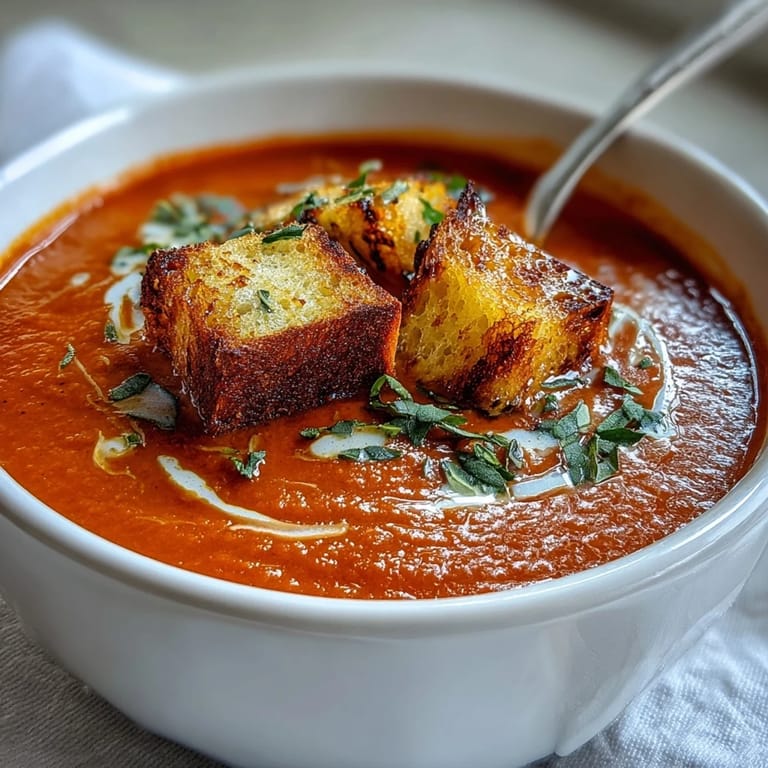
Save There's something about the smell of tomatoes hitting a hot pan that stops me mid-thought every single time. My neighbor knocked on my kitchen door one October afternoon asking what smelled so good, and I realized I'd been roasting tomatoes for three hours without noticing the time pass. That's when this soup became more than just a recipe to me—it became the thing I make when I want to slow down and actually taste what I'm cooking.
I made this for my roommate on the first cold day of the year, the kind of day where you're tired from the temperature shift alone. She came home, smelled it, and just sat at the kitchen counter for twenty minutes with a bowl, not saying much. That's when I knew the recipe was solid—no elaborate plating or explanation needed.
Ingredients
- Ripe tomatoes (1.5 kg): Don't skip ripeness here; underripe tomatoes will taste watery and sharp no matter how long you roast them, and you'll end up adding sugar to compensate.
- Large onion: The quarters caramelize into a subtle sweetness that balances the tomato acidity beautifully.
- Garlic cloves (4): Roasting softens their bite into something almost creamy and mellow.
- Olive oil (2 tbsp for roasting): Use something you actually like tasting; cheap oil makes a noticeable difference here.
- Salt and freshly ground black pepper: Grind the pepper fresh, always; pre-ground tastes dusty next to the brightness of roasted tomatoes.
- Dried or fresh thyme: Fresh thyme is prettier, but dried holds up better through the roasting and gives a deeper flavor note.
- Vegetable broth (500 ml): This is your liquid base, so make sure it's something you'd actually drink on its own.
- Tomato paste (1 tbsp): A small amount deepens the tomato flavor without making it taste like paste.
- Sugar (optional): I usually skip this unless the tomatoes taste particularly acidic; you'll know by tasting as you go.
- Heavy cream or coconut cream: This is optional but transforms it from soup into something that feels indulgent.
- Day-old bread (4 thick slices): Stale bread crisps up better than fresh; it absorbs the oil and seasons evenly rather than getting soggy.
- Olive oil for croutons (2 tbsp): Save your good oil for finishing; regular quality works fine for croutons.
- Garlic powder (½ tsp): It distributes more evenly than minced garlic on the bread cubes and adds a gentle, toasted depth.
Tired of Takeout? 🥡
Get 10 meals you can make faster than delivery arrives. Seriously.
One email. No spam. Unsubscribe anytime.
Instructions
- Heat your oven and prepare the pan:
- Preheat to 200°C (400°F) and grab your largest baking tray; crowding the tomatoes steam them instead of roasting them. You want them spread out with breathing room.
- Arrange and season the vegetables:
- Halve your tomatoes and quarter the onion, leaving garlic cloves whole and unpeeled; the skin slips off after roasting. Drizzle everything with olive oil and scatter thyme, salt, and pepper over top, then toss gently so the pieces are evenly coated.
- Roast until caramelized:
- Slide the tray into the oven and let it go for 30–35 minutes; you'll know it's ready when the tomato edges are dark brown and the onions are completely soft and golden. The kitchen will smell incredible, and yes, you should enjoy that part of the process.
- Prepare the croutons while vegetables roast:
- Cut day-old bread into roughly 2 cm cubes and toss them in a bowl with olive oil, garlic powder, salt, and pepper until every piece is coated. Spread them on a separate baking sheet and slide into the oven for the last 10–15 minutes of the tomato roasting time, stirring halfway through so they brown evenly on all sides.
- Build the soup base:
- Scrape the roasted tomatoes, onions, and garlic into a large saucepan; add the vegetable broth, tomato paste, and sugar if you're using it. Bring everything to a gentle simmer over medium heat and let it bubble quietly for about 10 minutes so the flavors meld together.
- Blend until velvety:
- Use an immersion blender to purée the soup until it's completely smooth and silky; if you're using a regular blender, work in batches and be careful with the heat. Taste it now, adjust the seasoning, and stir in cream if you want it richer.
- Serve with intention:
- Ladle the hot soup into bowls and top each one generously with warm or cooled croutons; the contrast between the velvety soup and crispy bread is the whole point. Serve immediately while everything is at its best.
 Save
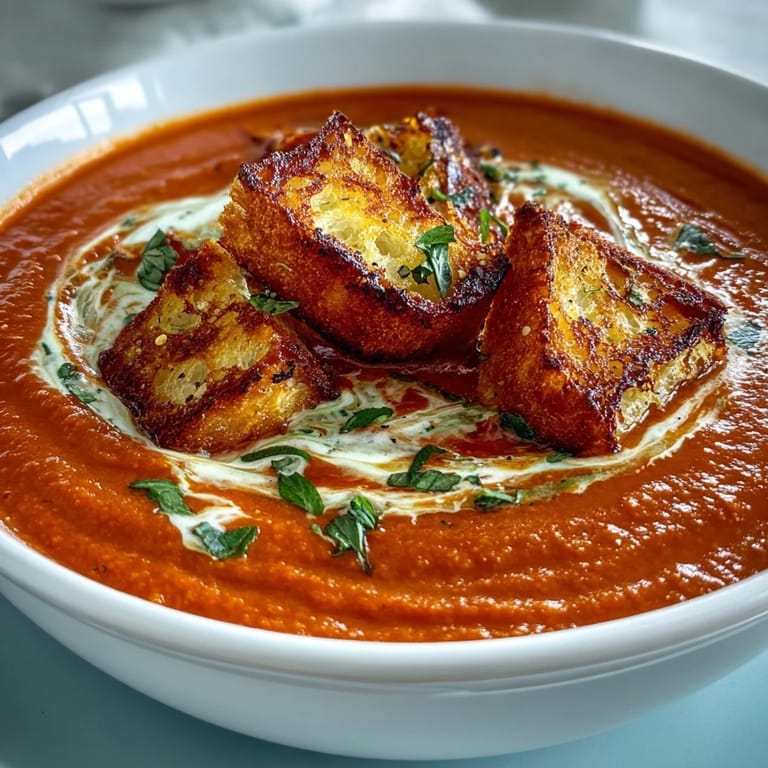
Save There was a moment last winter when a friend said this soup tasted like what comfort feels like, and I realized she wasn't being dramatic. Sometimes a recipe becomes memorable not because it's complicated, but because it's honest—tomatoes, heat, and a little bit of bread and cream.
Why Roasting Changes Everything
Roasting tomatoes isn't just a cooking method; it's a flavor transformation. The high heat draws out the water content, concentrates the natural sugars, and creates those caramelized edges that taste almost like a different ingredient than raw tomatoes. The onion sweetens, the garlic loses its harsh edge, and suddenly you're building soup from something deeply flavorful instead of starting with flat, watery tomato juice.
The Crouton Situation
Homemade croutons are one of those things that taste so much better than store-bought that once you make them, you'll never go back. They're golden, crispy, unapologetically buttery (or oily), and actually stay crunchy even after sitting in soup for a few minutes. If you only make croutons once, make them on the same day as roasting the tomatoes and you've solved half your dinner problem before you've even blended anything.
Making It Your Own
The beauty of this soup is that it's a solid foundation you can build from. I've added smoked paprika for earthiness, a splash of balsamic vinegar for depth, even a handful of fresh basil at the end. The base is strong enough that these additions feel like seasoning rather than desperation, and you can taste exactly what you're adding.
- A small pinch of smoked paprika adds a subtle, almost meaty depth that people often mistake for complex flavor.
- Fresh basil stirred in at the very end tastes brighter than basil that's simmered with the soup.
- If you're using coconut cream instead of dairy, let the soup cool slightly before stirring it in so the cream doesn't break from the heat.
 Save
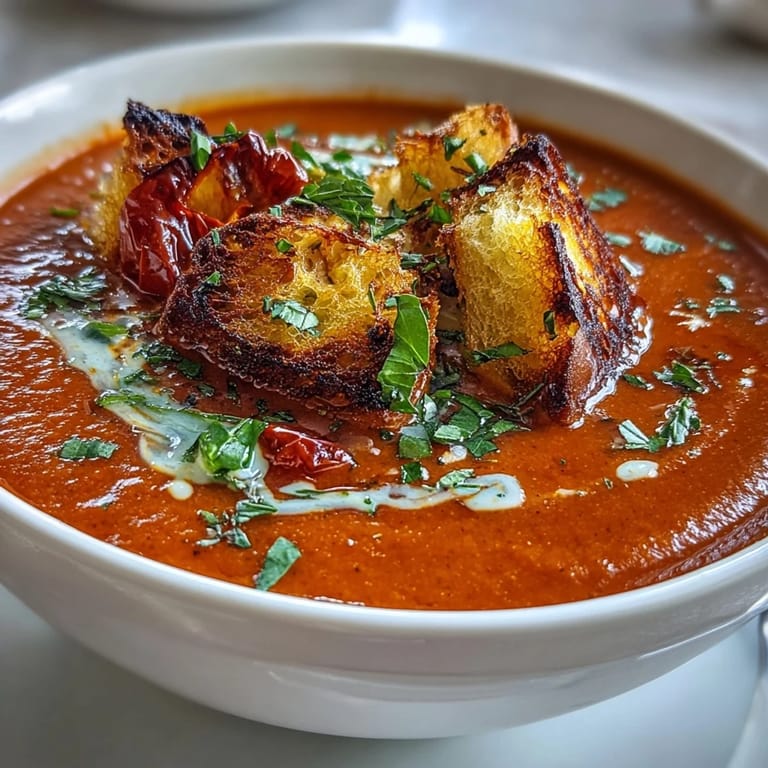
Save This soup tastes best when you're not rushing, when you can let the roasted tomatoes cool for a breath before blending, and when you top each bowl right before eating. It's the kind of meal that feels like taking care of yourself.
Questions & Answers for Recipes
- → How do I get the smoothest texture?
Blend thoroughly with an immersion blender or stand blender. For extra silkiness, press the purée through a fine-mesh sieve before adding cream.
- → Can I use canned tomatoes?
Fresh tomatoes work best for roasting, but you can substitute with whole canned plum tomatoes. Skip the roasting step and simmer longer to develop flavor.
- → What makes the croutons extra crispy?
Use day-old bread and cut cubes evenly. Toss thoroughly with oil and seasonings, then bake until golden throughout, stirring halfway for even browning.
- → How long does this keep?
The soup refrigerates well for 4-5 days. Store croutons separately at room temperature. Reheat soup gently, adding a splash of broth if thickened.
- → Can I freeze this soup?
Yes, freeze the soup base without cream for up to 3 months. Thaw overnight and reheat, stirring in cream after warming through.