 Save
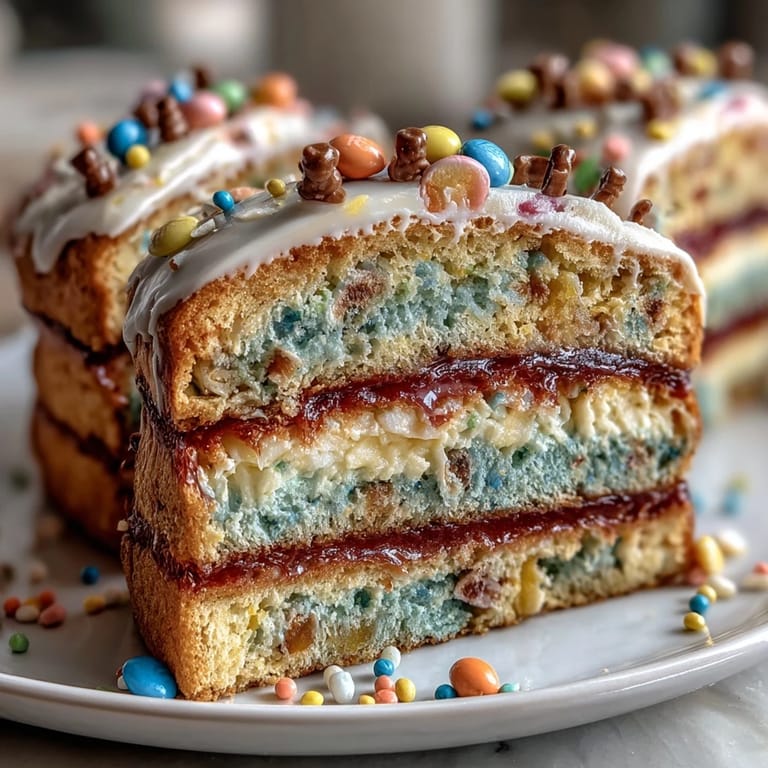
Save My neighbor knocked on the kitchen door while I was elbow-deep in rainbow batter, asking if I'd lost my mind because the sink was somehow every color of the spectrum. That's when I knew this Cinco de Mayo piñata cake was going to be the kind of dessert that made people stop mid-conversation and just stare. The idea of baking six colored layers, stacking them with a secret candy treasure inside, felt both ambitious and perfectly timed for the celebration we'd been planning. Something about the challenge of keeping those vibrant hues true while they baked made me giddy in a way that simple recipes never do.
I made this for my daughter's class celebration, and watching her friends circle the cake before I even cut it was pure magic. One kid asked if it was actually a piñata you could eat, and when the answer was yes, the whole room erupted. That's the moment I realized this cake had transcended being just dessert—it became the memory itself.
Ingredients
- All-purpose flour (3 cups): This is your structural backbone; don't skip sifting or you'll end up with dense layers that won't support the frosting properly.
- Baking powder and baking soda (2 ½ tsp and ½ tsp): The difference between airy, tender cake and something that lands like a hockey puck; measure these precisely or everything falls apart.
- Unsalted butter (1 cup for batter, 1 ½ cups for frosting): Room temperature is non-negotiable here—cold butter refuses to cream properly and you'll spend twenty minutes wondering what went wrong.
- Granulated sugar (2 cups): Beat this with the butter until it's genuinely fluffy and pale; that's when the magic starts happening.
- Large eggs (4, room temperature): Cold eggs seize up and create lumpy batter; let them sit on the counter while you prep everything else.
- Vanilla extract (2 tsp for cake, 2 tsp for frosting): Pure vanilla makes a noticeable difference; the imitation kind fades into the background.
- Whole milk (1 ¼ cups for batter, ¼ cup for frosting): Room temperature milk blends smoothly; cold milk creates tiny lumps that won't disappear.
- Gel food coloring (red, orange, yellow, green, blue, purple): Gel, not liquid—liquid makes the batter watery and pale; gel gives you those deep, vibrant jewel tones.
- Assorted small candies (1 ½ cups): Pick your favorites, but avoid anything sticky or you'll regret it when you're trying to slice; mini chocolate pieces and gummies work beautifully.
- Powdered sugar (5 cups, sifted): Sifting takes two minutes and makes your frosting silky instead of grainy; trust me on this.
- Salt (pinch for frosting): This tiny amount makes the frosting taste less sweet and more rounded.
Tired of Takeout? 🥡
Get 10 meals you can make faster than delivery arrives. Seriously.
One email. No spam. Unsubscribe anytime.
Instructions
- Set the stage for success:
- Preheat your oven to 350°F and arrange your three cake pans on a baking sheet—if you only have one or two, make a mental note to bake in batches. Grease and line each pan with parchment paper, pressing it into the corners so nothing sticks.
- Build your dry team:
- In a medium bowl, whisk together the flour, baking powder, baking soda, and salt until you've distributed the leavening agents evenly. This step prevents those occasional pockets of denseness that ruin an otherwise perfect cake.
- Cream butter and sugar like your life depends on it:
- In a large bowl, beat the softened butter and sugar together for about three minutes until the mixture transforms into something pale and fluffy. This isn't just mixing; you're incorporating air that will make your cake tender and light.
- Add eggs with patience:
- Drop each egg in one at a time, beating well after each addition so you don't end up with curdled batter. This step takes longer than you think it should, but it matters.
- Mix in the vanilla:
- Add 2 teaspoons of vanilla and beat until you smell it rising from the bowl. It's one of those small moments that reminds you why baking is worth doing.
- Alternate your wet and dry ingredients:
- Add one-third of the dry ingredients, beat briefly, then add half of the milk, beat again, then repeat the pattern, ending with dry. This alternating method prevents overdeveloped gluten and keeps your cake tender.
- Divide and tint:
- Divide the batter evenly into six bowls—a kitchen scale helps here if you're neurotic about equality, but eyeballing works too. Add gel coloring to each bowl, one color per bowl, stirring until the color is completely uniform.
- Pour and bake:
- Pour each colored batter into its pan and smooth the tops with a spatula; if you're batching, label your pans so you remember which color is which. Bake for 15 to 18 minutes until a toothpick inserted in the center comes out clean—don't overbake or the layers will crack when you cut them.
- Cool with intention:
- Let each layer cool in its pan for 10 minutes—this sets the structure—then turn it out onto a wire rack to cool completely. Trying to frost warm cake is a lesson you only learn once.
- Create the piñata cavity:
- Once all layers are cool, use your 3-inch round cutter to cut a hole in the center of four of the six layers, leaving your top and bottom layers whole. Press gently and twist to get a clean hole; take your time here because messy cavities make for difficult assembly.
- Make frosting that tastes like clouds:
- Beat softened butter until creamy, then gradually add sifted powdered sugar, milk, vanilla, and salt, beating until the mixture is smooth and fluffy. Taste it and adjust—if it's too sweet, add a tiny pinch more salt.
- Stack your rainbow treasure:
- Place your purple (bottom) whole layer on a serving plate, spread a thin layer of frosting, then stack the first cut-out layer on top. Frost lightly between each layer, repeating with all four cut-out layers in rainbow order.
- Fill with treasure:
- When all cut-out layers are stacked, pour your assorted candies into the center cavity created by those stacked layers. Listen to them tumble in; it's honestly satisfying.
- Cap it off:
- Place your final whole cake layer (usually the red one, if you're stacking in traditional rainbow order) over the candy-filled cavity, pressing gently so it sits evenly.
- Frost the outside generously:
- Cover the entire outside and top of the cake with frosting, creating smooth sides or fun textures with an offset spatula. This is your chance to make it look intentional and impressive, or delightfully chaotic—both work.
- Decorate with joy:
- Add colored frosting, sprinkles, or any festive decorations that match your vibe; no frosting police are coming to judge you.
- Chill before the big reveal:
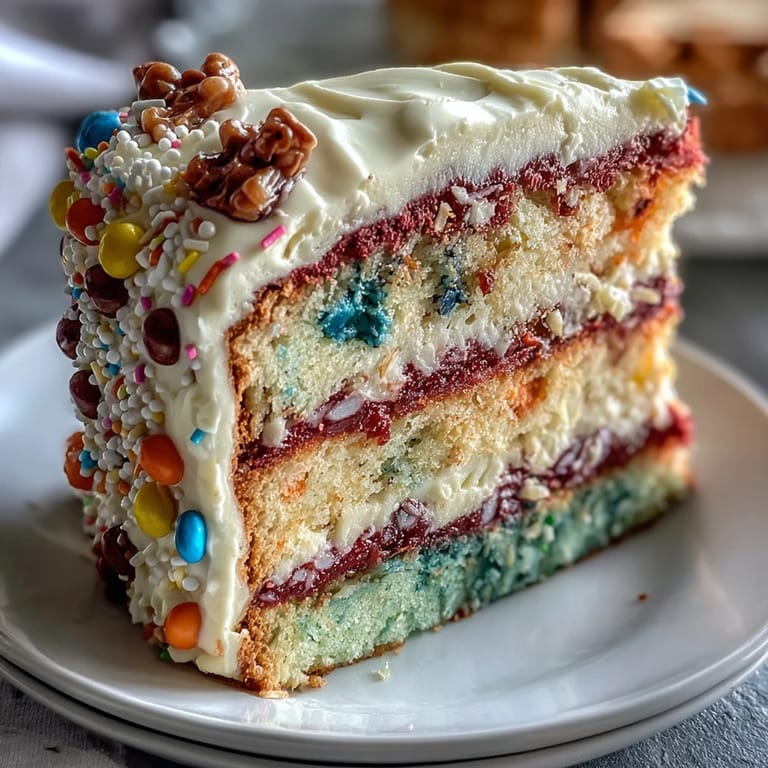
- Refrigerate the cake for at least 30 minutes before slicing so the layers set and the frosting firms up. This patience pays off when you make clean cuts and candies tumble out dramatically.
 Save
Save The best part came when someone pulled out a piece of cake and a cascade of candies spilled onto their plate, and they looked up at the table with genuine surprise. Food is supposed to create moments, and this cake does exactly that—it's festive, it's delicious, and it contains an actual element of discovery that makes everyone at the table feel like kids again.
Choosing Your Candies Wisely
The piñata filling is where you get to inject personality into this cake—there's no single right answer, just smart choices and ones you'll regret. Mini M&Ms, colorful gummies, rainbow sprinkles, and small chocolate pieces all work beautifully because they stay where you put them and won't ruin the cake structure. I learned the hard way that taffy and caramels are the enemy; they stick everything together and turn slicing into a frustrating guessing game. Whatever you choose, avoid anything sticky, overly large, or likely to melt into the frosting.
The Science of Rainbow Layers
Each layer of this cake is essentially the same batter divided and tinted, which means they all bake at the same rate and have identical texture—there's no guessing about which color might need extra time. The gel coloring doesn't affect the baking chemistry the way liquid coloring does, so you get true, vibrant colors that don't fade during baking. I was convinced the blue layer would bake differently than the yellow, but they all came out perfect and beautiful, which felt like small magic in my oven.
Assembly and the Art of Not Overthinking
The assembly process is genuinely easier than it looks, but there's a mental hurdle of handling six different layers and not accidentally mixing up your colors. The frosting acts as glue, so don't be shy with it between layers—thin frosting leads to layers sliding around and looking messy. The moment you place that final top layer and fill the cavity with candies, you've officially created something that looks like you spent hours planning when really you just followed your instincts, which is exactly what makes it feel special.
- Stack your layers in the order that makes you happy visually; you're not locked into any particular rainbow sequence.
- If a layer cracks or breaks, frosting can hide almost anything; there's no cake emergency here that can't be solved.
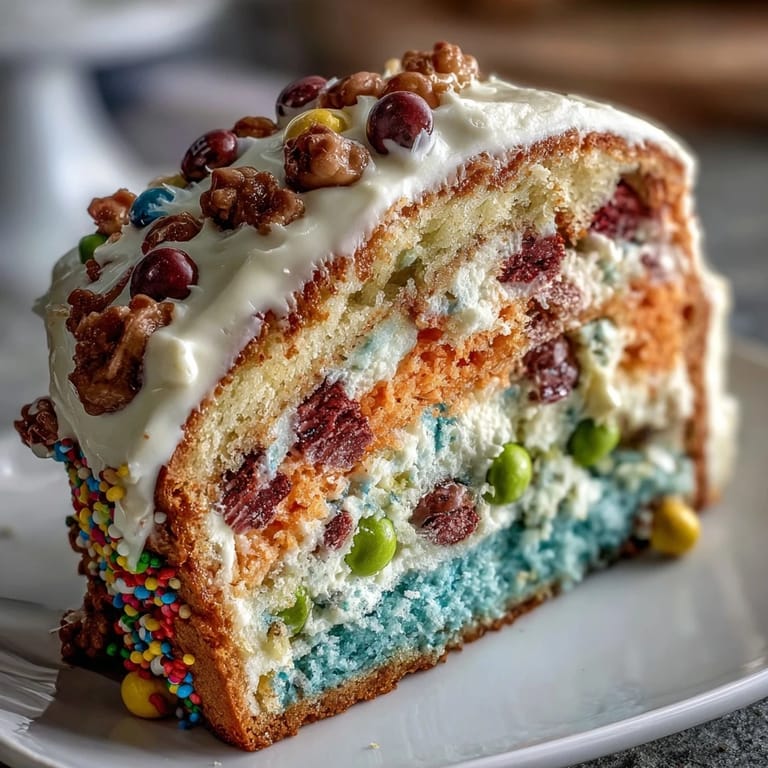
- Chill the cake for at least 30 minutes before slicing so the layers stay together and you actually see the candies when you cut.
 Save
Save This cake has become my go-to for celebrations that deserve something memorable—it's festive without being complicated, impressive without requiring culinary school, and genuinely fun to make. Every time I bake it, someone asks for the recipe, and I love that the answer involves surprise candy and rainbow layers.
Questions & Answers for Recipes
- → How can I achieve the vibrant colors in the layers?
Use gel food coloring to tint each portion of batter just before baking. Gel colors are more concentrated and won’t affect the cake's texture.
- → What candies work best for the piñata center?
Small candies like mini chocolates, sprinkles, or gummy bears work well, as they fit neatly and allow clean slicing.
- → How do I prevent the colors from blending during baking?
Bake each colored batter in separate pans or batches, then stack once cooled to maintain vibrant, distinct layers.
- → Can I prepare this cake in advance?
Yes, chilling the assembled cake for at least 30 minutes improves stability and makes slicing easier with the candy surprise inside.
- → Are there gluten-free alternatives for the flour?
A 1:1 gluten-free flour blend can substitute all-purpose flour without compromising texture or rise.
- → What tools are recommended for making this cake?
Essential tools include multiple 8-inch round pans, gel food coloring, a round cutter for the candy cavity, and an electric mixer for smooth frosting.